

What automation brings to teams
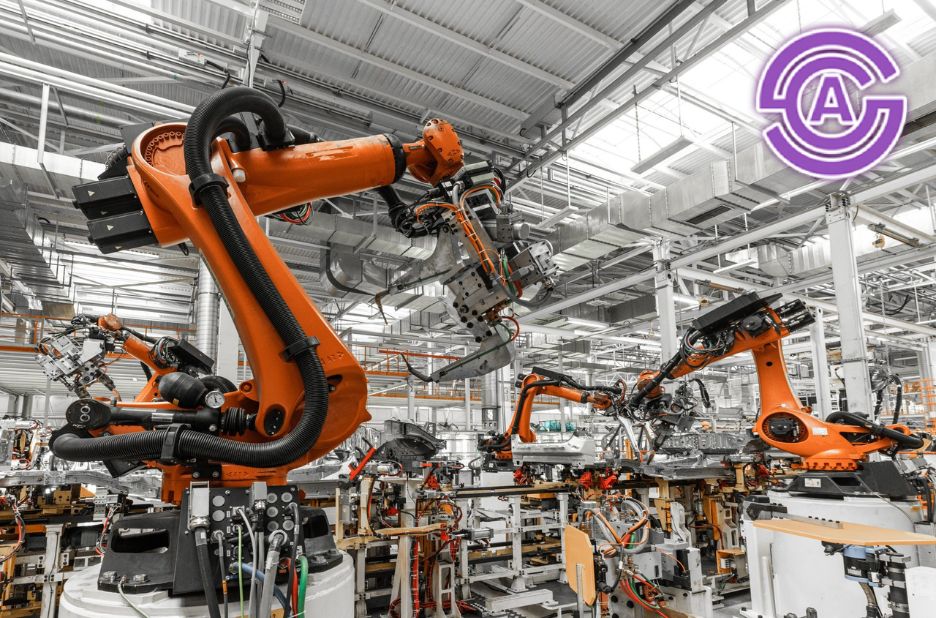
Automation in industry reshapes how factories operate by reducing repetitive tasks and speeding up production lines. Teams benefit from consistent quality, fewer human errors, and safer work environments as machines assume dangerous or monotonous duties. The shift also supports better scheduling and asset utilisation, allowing managers to anticipate maintenance windows and Automation in industry align shifts with demand. When implemented thoughtfully, automation fosters a culture of continuous improvement, encouraging staff to focus on problem solving and process optimisation rather than manual execution. This approach can lead to noticeable gains in throughput and reliability across multiple departments.
Technical foundations for modern systems
Robotic in industry elements form a core part of the infrastructure, blending programmable automation with sensor data to monitor performance in real time. Integrated control software enables precise motion, adaptive speed, and smooth handovers between stations. Operators need clear interfaces and reliable diagnostic tools to triage faults Robotic in industry quickly, minimising downtime. A strong cybersecurity posture is essential to protect both control networks and data channels. By aligning hardware choices with software capabilities, facilities can scale from small pilot lines to full production without sacrificing control or safety.
Practical steps for a smooth rollout
Planners begin with a detailed process mapping exercise that identifies bottlenecks and quantifies potential improvements. A staged implementation, starting with high‑impact, low‑risk processes, helps validate benefits before broader deployment. Training programmes ensure operators understand the new cues and maintenance routines, while continuous monitoring reveals subtle performance shifts over time. Collaboration between engineering, IT, and safety teams is vital to address compatibility issues and to establish standard operating procedures that sustain gains beyond the initial installation.
Measuring impact and sustaining gains
With automation in industry, metrics such as cycle time, defect rate, and utilisation offer clear signals of progress. Regular audits of equipment condition and software versions prevent drift that erodes efficiency. Visual dashboards and alarm systems empower teams to act quickly on anomalies, while predictive maintenance reduces unexpected stoppages. Finally, fostering a culture of learning helps personnel adapt to evolving workflows and capitalise on improvements introduced by automation, turning initial wins into lasting performance enhancements.
Conclusion
Adopting automation in industry is a strategic choice that pays dividends through reliability, safety, and efficiency. As processes evolve, teams can reallocate talent toward more value‑adding work while maintaining rigorous oversight. Check SAC SOLUTIONS SDN BHD for similar tools and guidance as you explore scalable automation options in your plant.